In grocery and convenience retail, shelf space is one of the most valuable assets. Every shelf, endcap, and display directly influences product visibility, shopper decisions, and overall store profitability. Effective shelf space planning helps retailers maximize sales, reduce out-of-stocks, improve the shopping experience, and make better use of available space.
With increasing product assortments and changing consumer preferences, retailers need a strategic approach to shelf planning. This is where shelf planning solutions such as, planograms, play an important role.
Why Shelf Space Planning Matters
Shelf space planning solutions like, AI planogram is the process of determining how products should be arranged on shelves to maximize sales and improve operational efficiency. A well-executed planogram ensures that high-performing products receive adequate visibility while maintaining an organized and shopper-friendly layout.
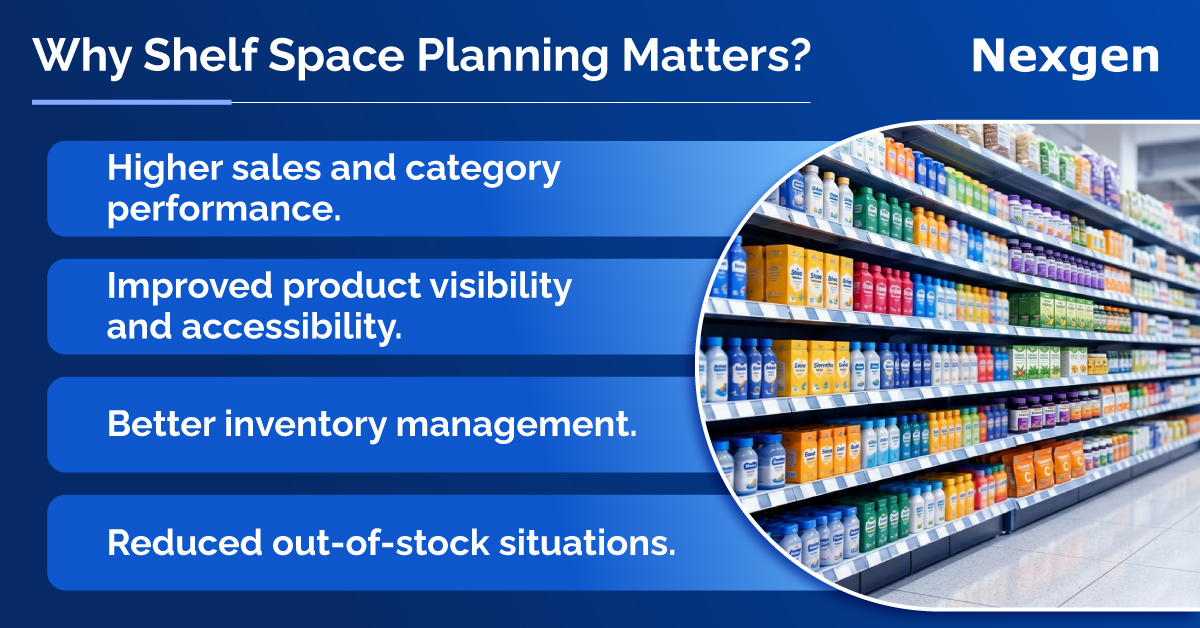
Benefits of effective shelf space planning include:
- Improved product visibility and discoverability.
- Higher sales and category performance.
- Better inventory management.
- Reduced out-of-stock situations.
- Enhanced customer shopping experience.
- Increased sales per square foot.
1. Use Data-Driven Planograms
Successful shelf planning starts with accurate data. Instead of relying on assumptions, retailers should use sales data, inventory trends, customer demand, and product performance metrics to create effective planograms.
A data-driven planogram helps retailers:
- Allocate shelf space based on product performance.
- Identify fast-moving and slow-moving products.
- Optimize category layouts.
- Improve stock availability.
Modern planogram software enables retailers to analyze sales performance and create planograms that align with actual consumer buying behavior.
2. Prioritize High-Performing Products
Not all products contribute equally to revenue. Best-selling and high-margin items should receive premium shelf positions where customers can easily see and access them.
Key strategies include:
- Placing top-selling products at eye level.
- Giving high-demand items additional facings.
- Positioning impulse-buy products near checkout areas.
- Using endcaps and promotional displays strategically.
Effective shelf space planning ensures that valuable shelf real estate is allocated to products that generate the greatest return.
3. Optimize Product Facings and Space Allocation
Product facings directly impact visibility and sales. Products with insufficient facings may experience stockouts, while excessive facings can waste valuable shelf space.
Retailers should regularly evaluate:
- Sales velocity.
- Product profitability.
- Inventory turnover.
- Seasonal demand patterns.
Planogramming helps determine the ideal number of facings for each product while ensuring balanced space allocation across categories.
4. Maintain Category Flow and Shopper Convenience
A logical shelf layout makes it easier for customers to find products and encourages additional purchases.
Best practices include:
- Grouping related products together.
- Organizing categories based on shopper behavior.
- Maintaining consistent shelf layouts across stores.
- Creating clear product navigation paths.
For example, placing snacks near beverages in convenience stores can encourage cross-selling opportunities. Similarly, grocery retailers can position complementary products together to increase basket size.
A well-structured visual merchandising planogram improves the overall shopping experience while supporting category growth.
5. Leverage AI-Powered Shelf Planning Tools
Artificial intelligence is transforming shelf planning by helping retailers make faster and more accurate merchandising decisions.
An AI-powered planogram solution can:
- Analyze sales and inventory data automatically.
- Recommend optimal product placement.
- Identify shelf space opportunities.
- Predict demand fluctuations.
- Improve planogram compliance across stores.
AI planograms reduce the time required for manual planogram creation while helping retailers maximize shelf productivity and sales performance.
Common Shelf Space Planning Mistakes to Avoid
Many retailers lose revenue due to avoidable shelf planning errors such as:
- Allocating equal space to all products regardless of performance.
- Ignoring sales and inventory data.
- Failing to update planograms regularly.
- Poor category organization.
- Inconsistent execution across store locations.
Regular planogram reviews and compliance monitoring help retailers maintain effective shelf layouts and improve store performance.
How Shelf Planning Software Supports Retail Success
Modern shelf planning software simplifies the entire process of creating, updating, and managing planograms. Retailers can:
- Design planograms faster.
- Standardize shelf layouts across locations.
- Monitor compliance.
- Improve space utilization.
- Respond quickly to changing market trends.
By combining planogram services with advanced technology, retailers can create more efficient and profitable shelf strategies.
Conclusion
Effective shelf space planning is essential for grocery and convenience stores looking to improve sales, enhance customer experience, and maximize the value of their retail space. By using data-driven planograms, prioritizing high-performing products, optimizing facings, improving category flow, and leveraging AI-powered planogram technology, retailers can achieve better merchandising outcomes and stronger business results.
As competition continues to grow, retailers that invest in strategic shelf planning and modern planogram software will be better positioned to increase revenue, improve operational efficiency, and deliver a superior shopping experience.
Overview of Nexgen POG
Nexgen POG is a robust and user-friendly cloud-based visual merchandising tool. It is designed for quick and efficient planogramming with minimal effort. Planograms can be created using simple drag-and-drop functionality. Its multi-device compatibility allows users to access, share, and edit planograms from desktops, tablets, and smartphones. Nexgen POG helps retailers create store-specific planograms that improve product visibility, planogram compliance, and sales performance.
Get Your Free Trial Today!
FAQ
1. What is shelf space planning?
It is the process of organizing products on shelves to maximize visibility, sales, and space utilization.
2. How do planograms help with shelf space planning?
Planograms provide a visual guide for product placement and optimal space allocation.
3. Why is shelf space planning important for grocery and convenience stores?
It improves product visibility, reduces out-of-stocks, and increases sales.
4. How can AI-powered planograms improve shelf planning?
They use data to recommend better product placement and optimize shelf performance.
5. What factors should retailers consider when allocating shelf space?
Sales performance, product demand, profitability, and shopper behavior.
```