Every inch of shelf space represents an opportunity to generate revenue. In today’s competitive retail environment, shelf space planning is more than arranging products. It involves making data-driven decisions that improve sales, product availability, shopper experience, and store execution.
A well-designed planogram helps merchandising teams determine where products should be placed, how much space they should receive, and how different products should be presented within a category. With modern planogram software and AI-powered solutions, retailers can make these decisions faster while reducing manual effort.
But how can retailers determine whether their shelf optimization strategy is delivering measurable business value?
The answer lies in tracking the right retail KPIs.
Here are five key metrics that can help retailers evaluate the impact of AI planograms and visual merchandising strategies.
1. Sales per Square Foot
Sales per square foot measures the revenue generated from a specific amount of retail selling space. It is an important KPI for understanding whether shelf space is being allocated effectively.
Retailers can use planograms to allocate appropriate space to high-performing products while reviewing the role of slow-moving items. Better product placement and space allocation can help retailers generate more value from the same store footprint.
For example, comparing sales per square foot before and after implementing a new visual merchandising planogram can help retailers understand whether changes to product placement are contributing to improved category performance. Tracking this metric consistently can also help merchandising teams identify categories and stores where additional shelf optimization opportunities exist.
2. Shelf Space Utilization
Shelf space is one of the most valuable assets in a physical store. Inefficient allocation can result in valuable space being occupied by products that generate limited returns.
Shelf space utilization measures how effectively the available shelf capacity is being used. Retailers can evaluate factors such as product facings, assortment, product dimensions, and sales performance to determine whether space is being used efficiently.
Planogram software allows merchandising teams to visualize different shelf configurations and evaluate how products can be positioned more effectively.
Effective shelf space planning can help retailers give high-demand products adequate space while maintaining a balanced and shopper-friendly category layout. The objective is simple: make every inch of shelf space contribute to better retail performance.
3. Planogram Compliance
Creating a planogram is only part of the merchandising process. The planned layout must also be implemented correctly in stores.
Planogram compliance measures how closely the actual store shelf matches the intended planogram. Poor compliance can result in incorrect product placement, missing facings, inconsistent displays, and reduced product visibility.
Consistent compliance is particularly important for retailers managing large numbers of stores. Even a well-designed planogram can lose its effectiveness if stores do not execute it as intended.
Modern planogram services can help retailers create standardized layouts, distribute them efficiently, and support more consistent implementation across locations. Improving compliance can help retailers maintain consistent merchandising standards and ensure that shelf strategies are reflected in the physical store.
4. Out-of-Stock Rate
A product cannot generate a sale if it is unavailable when a shopper wants it. The out-of-stock rate measures how often products are unavailable on the shelf.
While inventory management and replenishment play major roles, shelf planning can also influence product availability.
High-demand products may require additional facings or greater shelf capacity to accommodate shopper demand. AI planograms can help retailers analyze product and category data to support more informed space allocation decisions.
By giving important products the appropriate amount of shelf space, retailers can create layouts that better support demand and product availability. Reducing out-of-stock situations can help protect potential revenue while creating a more reliable shopping experience for customers.
5. Planogram Creation and Deployment Time
Retail performance is not the only area where retailers can measure improvement. Merchandising productivity is another important consideration.
Retail teams managing hundreds or thousands of stores may spend considerable time creating, reviewing, updating, approving, and deploying planograms.
Traditional planogramming processes can involve multiple manual steps. AI powered planogram solutions can assist with repetitive planning activities, helping teams create layouts more efficiently and respond faster to seasonal, promotional, and assortment changes.
Retailers can measure the time required to create and deploy planograms before and after adopting new technology. This provides a practical way to evaluate productivity improvements.
The goal is not simply to create more planograms. It is to help merchandising teams spend less time building layouts and more time focusing on category strategy and business decisions.
Turning Shelf Optimization Into Measurable ROI
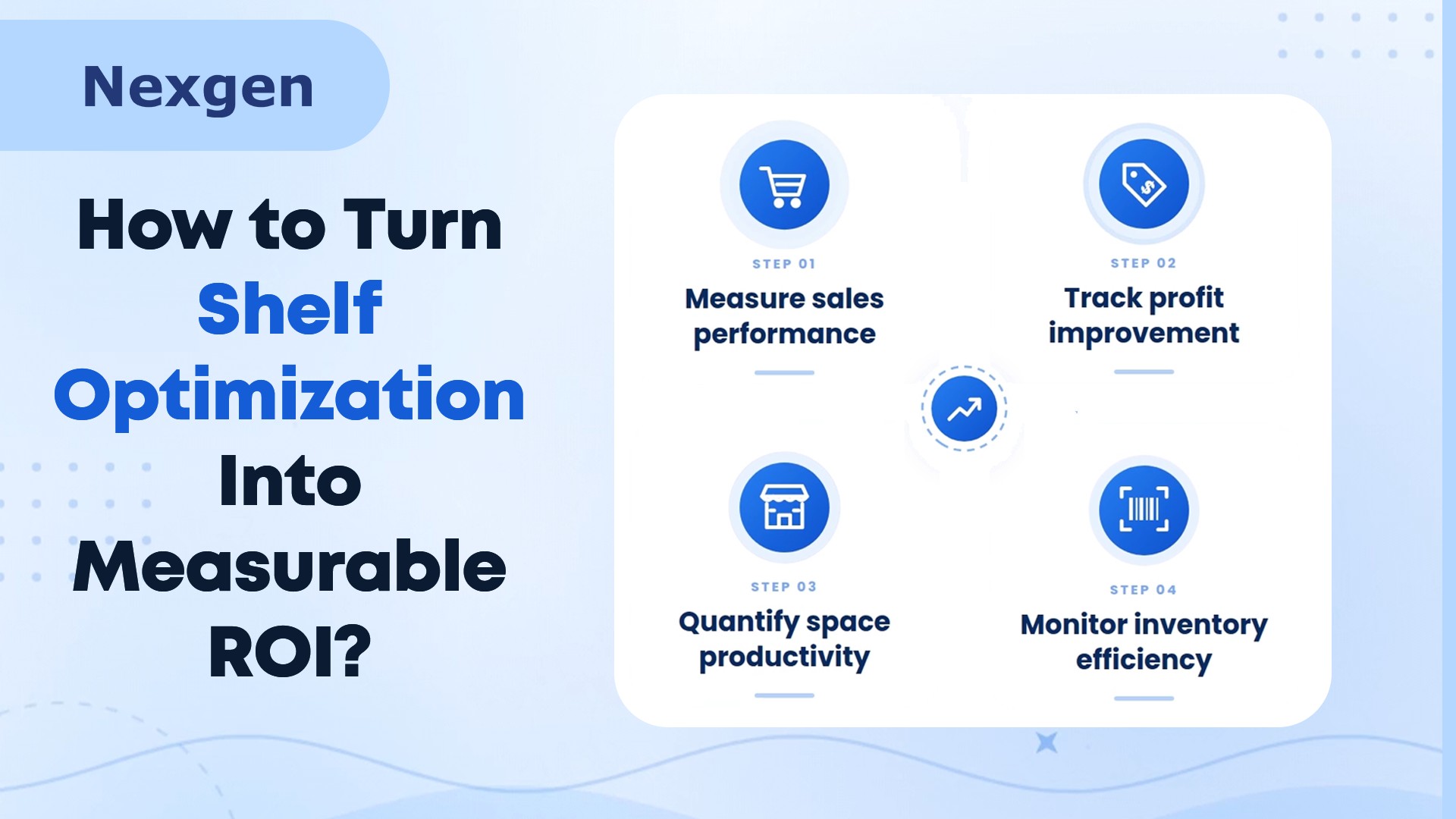
The value of shelf optimization goes beyond creating attractive displays. Retailers need to understand whether their shelf strategies are producing measurable business results.
Tracking sales per square foot, shelf space utilization, planogram compliance, out-of-stock rates, and planogram creation time can provide a clearer picture of performance.
These KPIs can also help retailers evaluate the impact of new planogram services, shelf planning software, and AI-assisted merchandising solutions.
For retailers considering an AI powered planogram solution, the key question should not simply be whether the technology can generate a planogram.
The more important question is: What measurable business value can it deliver?
Overview of Nexgen POG
Nexgen POG helps retailers optimize shelf space, improve planogram compliance, and accelerate merchandising decisions through AI-assisted planning and cloud-based collaboration.
By combining smarter planning with efficient execution, retailers can work toward better space utilization, faster planogram deployment, improved category performance, and stronger sales per square foot.
Ultimately, successful shelf optimization is not about adding more technology. It is about making better decisions with the shelf space retailers already have.
Get Your Free Trial Today!
FAQ
1. What is a planogram in retail?
A planogram in retail is a visual representation showing how products should be arranged and displayed on shelves or retail fixtures.
2. What is planogramming?
Planogramming is the process of designing and managing product layouts to optimize shelf space, product visibility, and category performance.
3. What is AI powered planogram software?
AI powered planogram software uses artificial intelligence and data-driven capabilities to assist retailers with creating, optimizing, and managing product layouts.
4. Why is planogram compliance important?
Planogram compliance helps ensure that stores implement the intended product placement, facings, and shelf layouts consistently.
5. How does shelf planning software help retailers?
Shelf planning software helps retailers plan product placement, optimize space allocation, create planograms more efficiently, and improve merchandising consistency across stores.