Modern supermarkets manage thousands of products across multiple categories, making shelf organization and inventory management increasingly challenging. Traditional shelf planning methods often rely on manual decisions, historical assumptions, and time-consuming processes. Today, artificial intelligence is transforming the way supermarkets optimize shelf space, improve product visibility, and enhance shopper experiences.
AI planogram helps supermarkets use data-driven insights to create smarter planograms, maximize sales per square foot, and ensure products are always positioned where they perform best.
What is AI-Based Shelf Optimization?
AI-based shelf optimization uses artificial intelligence, machine learning, and retail analytics to improve product placement on store shelves. These systems analyze customer behavior, sales trends, inventory levels, store traffic, and product performance to recommend the most effective shelf layouts.
Unlike traditional , AI-powered planograms adapts to changing shopping patterns and market demands.
Why Shelf Optimization Matters in Supermarkets
Shelf placement directly impacts customer buying decisions. Poorly organized shelves can lead to low product visibility, reduced sales, and out-of-stock situations. Supermarkets also face challenges such as managing limited shelf space, seasonal demand changes, and maintaining compliance across multiple locations.
AI helps retailers solve these issues by improving shelf efficiency and automating decision-making processes.
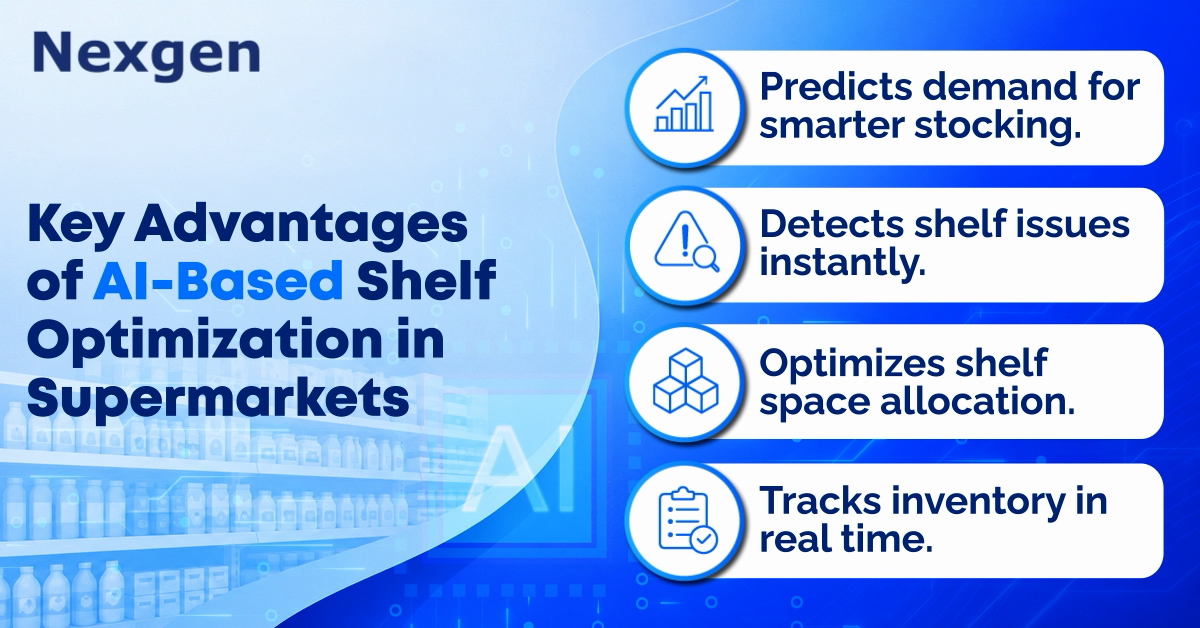
Key AI-Based Shelf Optimization Strategies for Supermarkets
1. Data-Driven Product Placement
AI analyzes sales data, shopper behavior, and product demand to determine the best shelf placement for each item. High-performing products can be positioned at eye level, while complementary items can be grouped together to encourage cross-selling.
This strategy helps supermarkets:
- Increase product visibility.
- Improve customer engagement.
- Boost impulse purchases.
- Improve category performance.
2. Real-Time Shelf Monitoring
AI-powered systems use cameras, sensors, and image recognition technology to monitor shelves continuously. These systems can instantly identify empty spaces, misplaced products, and stock shortages.
Real-time shelf monitoring helps supermarkets:
- Reduce stockouts.
- Improve replenishment speed.
- Maintain shelf accuracy.
- Improve operational efficiency.
3. Demand Forecasting for Better Shelf Allocation
AI tools predict future demand based on seasonal trends, weather conditions, local events, and historical sales data. Supermarkets can allocate shelf space more efficiently by increasing space for high-demand products during peak seasons.
For example, supermarkets can:
- Expand beverage sections during summer.
- Increase festive product displays during holidays.
- Adjust shelf space during promotional campaigns.
- Prepare inventory for seasonal demand spikes.
4. Automated Planogram Generation
Creating planograms can take significant time and effort. AI automates this process by generating optimized shelf layouts based on real-time retail data.
Automated planogram help supermarkets:
- Reduce manual planning time.
- Improve merchandising consistency.
- Optimize shelf arrangements faster.
- Maintain standardization across stores.
5. Personalized Shelf Optimization
AI can identify shopping patterns specific to individual store locations. Instead of using the same layout for every store, supermarkets can customize shelf arrangements based on local customer preferences.
This localized approach helps retailers:
- Improve product relevance.
- Increase customer satisfaction.
- Enhance shopper engagement.
- Create better sales opportunities.
6. AI-Powered Shelf Compliance
Maintaining planogram compliance is a major challenge for large supermarket chains. AI-powered compliance tools compare actual shelf conditions with planned layouts using image recognition technology.
Store managers receive alerts when:
- Products are misplaced.
- Shelves are empty.
- Displays do not follow merchandising guidelines.
- Promotional products are missing.
Benefits of AI Shelf Optimization for Supermarkets
- Improved sales performance.
- Better product visibility.
- Faster replenishment processes.
- Reduced out-of-stock situations.
- Enhanced shopper experiences.
- Increased operational efficiency.
- Better use of retail shelf space.
- Consistent planogram compliance.
By automating shelf management tasks, supermarket staff can focus more on customer service and store operations.
How AI is Transforming Supermarket Merchandising
AI is changing supermarket merchandising from a reactive process into a proactive strategy. Instead of relying only on past sales reports, retailers can now use predictive analytics and real-time data to make faster and smarter shelf decisions.
AI-powered merchandising helps supermarkets:
- Identify fast-moving products quickly.
- Optimize promotional product placement.
- Improve category management strategies.
- Adapt shelf layouts based on shopper behavior.
This improves both operational performance and the overall customer shopping experience.
Overview of Nexgen POG
Nexgen POG is a robust and user-friendly cloud-based visual merchandising tool. It is designed for quick and efficient planogramming with minimal effort. Planograms in retail can be designed by easily dragging and dropping products. AI-driven autofill capabilities can automatically arrange products based on predefined rules, category roles, and sales data, significantly reducing the time required to build accurate and high-performing planograms.
The multi-device compatibility feature of POG allows users to obtain, share, and edit planograms on any device, including mobile phones. It helps in designing store-specific planograms for increased product visibility and sales.
Get Your Free Trial Today!
FAQ
1. What is AI shelf optimization in supermarkets?
AI shelf optimization uses artificial intelligence and retail data to improve product placement, shelf organization, and inventory management in supermarkets.
2. How do AI planograms help supermarkets?
AI planograms automate shelf planning by analyzing customer behavior, sales trends, and product performance to create optimized shelf layouts.
3. Can AI reduce out-of-stock issues in supermarkets?
Yes. AI systems monitor shelves in real time and send alerts when products are running low or missing, helping stores replenish inventory faster.
4. Why is shelf compliance important in supermarkets?
Shelf compliance ensures products are displayed according to merchandising guidelines, improving product visibility, customer experience, and sales performance.
5. What are the benefits of AI-based shelf optimization?
AI-based shelf optimization improves operational efficiency, maximizes shelf space, enhances shopper experiences, increases sales, and supports better inventory accuracy.