Retail shelves are no longer managed with guesswork and static layouts alone. As customer expectations, shopping behaviors, and competition continue to evolve, retailers are turning toward smarter technologies to improve shelf performance. One of the biggest shifts in retail merchandising is the move from traditional planograms to AI-powered shelf optimization. But which approach is better for modern retail stores?
In this blog, we will compare AI shelf optimization and traditional planograms, explore their advantages and limitations, and understand how AI is transforming retail space planning.
What are Traditional Planograms?
Traditional planograms are visual diagrams that show where products should be placed on store shelves. Retailers use them to organize products based on categories, brand placement, shelf size, and merchandising goals. For years, traditional planograms have helped retailers:
- Maintain shelf consistency across stores.
- Improve product visibility.
- Support category management.
- Increase operational efficiency.
- Guide store employees on shelf arrangement.
Traditional planograms are often created manually or with basic software tools using historical sales data and merchandising experience.
What is AI Shelf Optimization
AI shelf optimization uses artificial intelligence, machine learning, and retail analytics to create smarter and more dynamic shelf layouts. Instead of relying only on historical data, AI analyzes real-time information such as:
- Customer buying patterns.
- Seasonal trends.
- Inventory levels.
- Store traffic behavior.
- Product performance.
- Out-of-stock risks.
- Shopper preferences.
AI-powered planogram services continuously adapt shelf arrangements to improve sales, product visibility, and shopper engagement.
1. Data Analysis
Traditional planograms rely heavily on historical data and manual analysis. Merchandising teams often spend significant time reviewing reports and updating layouts.
AI processes large amounts of real-time data instantly. It identifies trends, predicts demand, and recommends optimal product placements automatically.
2. Speed and Automation
Creating and updating traditional planograms can be time-consuming, especially for retailers managing multiple stores. AI automates shelf planning processes and quickly adjusts layouts based on changing retail conditions.
Retailers can quickly adapt layouts for:
- Seasonal demand changes.
- Product launches.
- Store-specific merchandising needs.
- Promotional campaigns.
This automation helps retailers improve efficiency and respond faster to market changes.
3. Accuracy and Shelf Compliance
Manual shelf planning may lead to inconsistencies, misplaced products, and compliance issues. AI-driven systems improve accuracy through automated recommendations and image recognition technologies that monitor shelf compliance in real time.
This helps retailers reduce:
- Product placement errors.
- Compliance gaps.
- Shelf inconsistencies.
As a result, retailers can maintain better shelf standards and improve operational performance.
4. Flexibility and Adaptability
Traditional layouts are often static and may not adapt quickly to seasonal trends or sudden changes in customer demand. AI continuously learns from shopper behavior and adjusts shelf strategies dynamically.
Improved adaptability allows retailers to:
- Respond faster to shopper trends.
- Optimize seasonal merchandising.
- Improve promotional effectiveness.
5. Human Expertise
Traditional planograms rely strongly on human merchandising knowledge and retail experience. AI supports decision-making but still benefits from human oversight for strategic planning and creative merchandising.
Human expertise remains important for:
- Brand storytelling.
- Creative visual merchandising.
- Strategic retail planning.
6. Cost and Implementation
Traditional systems may have lower upfront costs and simpler implementation processes. AI solutions may require higher investment initially but often deliver long-term ROI through improved efficiency and sales growth.
Long-term benefits of AI implementation may include:
- Improved sales performance.
- Better inventory accuracy.
- Reduced operational inefficiencies.
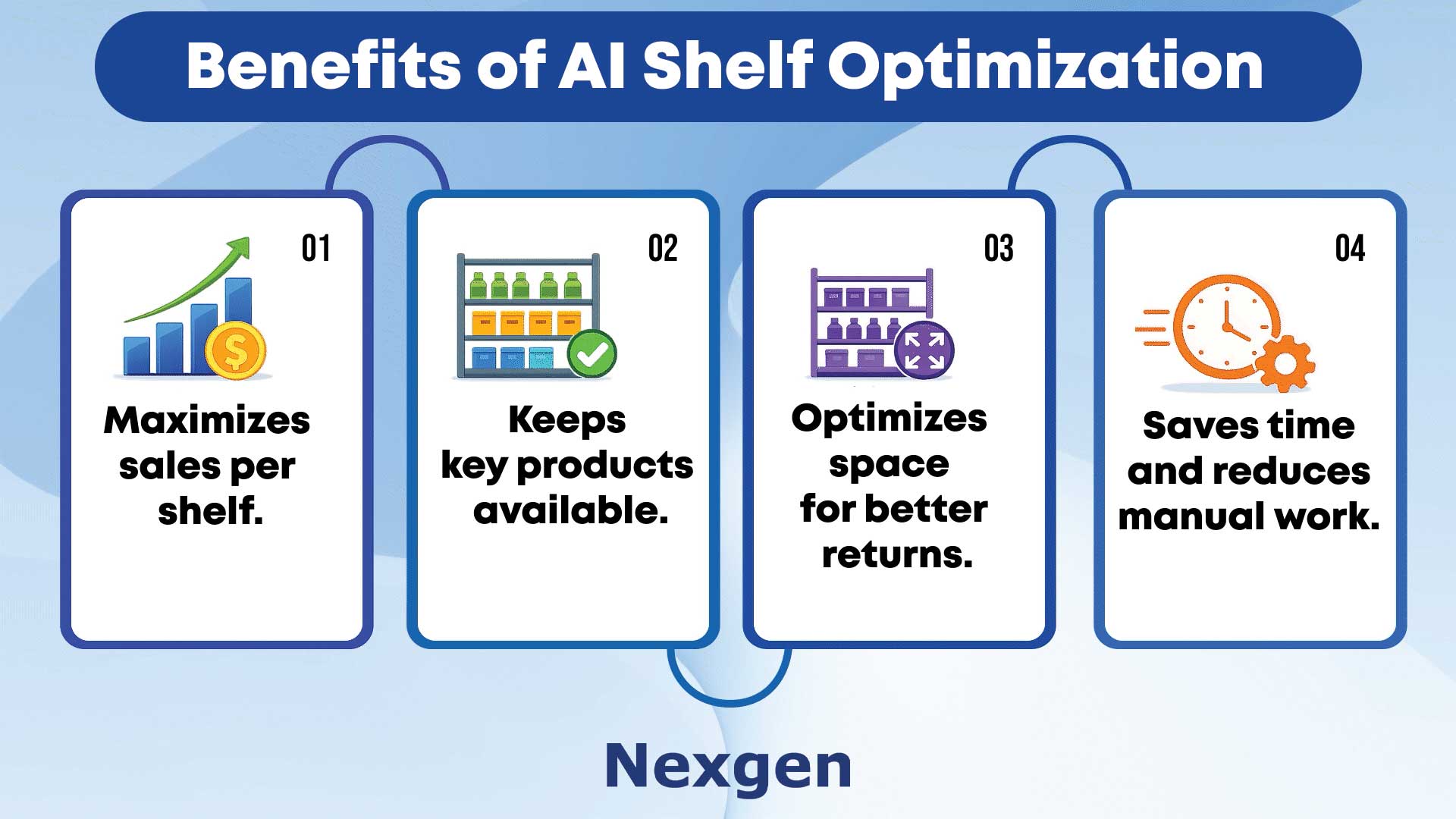
Benefits of AI Shelf Optimization
Retailers adopting AI-powered planograms can experience several advantages:
1. Improved Sales Performance
AI identifies the best-performing shelf placements that increase product visibility and encourage purchases.
Retailers can benefit from:
- Higher product visibility.
- Increased impulse purchases.
- Better sales per square foot.
2. Better Inventory Management
AI helps reduce out-of-stock and overstock situations by aligning shelf space with product demand.
This improves:
- Inventory accuracy.
- Replenishment efficiency.
- Product availability.
3. Faster Decision-Making
Retail teams can make smarter merchandising decisions using real-time analytics and predictive insights.
AI-driven insights help retailers:
- Respond quickly to changing trends.
- Optimize promotional strategies.
- Improve operational efficiency.
4. Personalized Shopping Experience
AI can optimize shelves based on local customer preferences and shopping behavior.
This can lead to:
- Better customer engagement.
- Improved product discovery.
- Higher customer satisfaction.
Can Traditional Planograms and AI Work Together?
Yes. Many retailers are combining traditional merchandising expertise with AI-powered optimization tools. Human retail knowledge remains valuable for:
- Brand storytelling.
- Visual merchandising creativity.
- Strategic promotions.
- Store-specific adjustments.
AI complements these efforts by providing data-driven recommendations and automation.
Overview of Nexgen Planogram Services
Nexgen offers store-specific planogram services for clients that optimize sales and achieve category objectives. We create customized planograms for your business to ensure that these are better aligned with your goals and merchandising strategies. Our expertise in planogram automation helps us build planograms faster, better and consistently. Whether it is creating a planogram from scratch, or a typical reset, we have the knowledge, tools, and experience to get the job done for you.
Get in Touch!
FAQ
1. What is the difference between traditional planograms and AI shelf optimization?
Traditional planograms rely on manual planning and historical data, while AI shelf optimization uses real-time analytics and machine learning to improve shelf performance dynamically.
2. How does AI improve retail shelf optimization?
AI analyzes customer behavior, sales trends, and inventory data to recommend better product placements and improve merchandising decisions.
3. Are AI planograms suitable for small retail stores?
Yes. AI-powered planograms can help small retailers improve shelf organization, inventory management, and customer experience.
4. Can AI reduce out-of-stock issues in retail?
Yes. AI helps predict product demand and optimize shelf replenishment, reducing the chances of out-of-stock situations.
5. Is AI shelf optimization expensive to implement?
Initial costs may be higher compared to traditional methods, but AI solutions often provide long-term ROI through increased sales and operational efficiency.