Convenience stores operate in a fast-paced retail environment where every inch of shelf space matters. With limited floor space, changing consumer preferences, and high product turnover, store owners need smarter ways to manage product placement and inventory. This is where AI-powered planograms are transforming convenience store merchandising.
AI planogram use artificial intelligence, data analytics, and automation to optimize shelf layouts, improve product visibility, and increase sales performance. By analyzing shopper behavior, sales trends, and inventory data, AI-driven planograms help convenience stores create more efficient and profitable retail spaces.
What Are AI Planograms?
AI planograms are digitally generated shelf layouts that use artificial intelligence to determine the best product placement strategies. Unlike traditional planograms that rely heavily on manual decisions and historical assumptions, AI-powered planograms continuously analyze data and make recommendations based on real-time insights.
These solutions can evaluate factors such as:
- Product demand.
- Seasonal buying trends.
- Customer shopping patterns.
- Shelf availability.
- Inventory levels.
- Store performance metrics.
The goal is to maximize product visibility, improve customer experience, and drive higher sales.
Why Convenience Stores Need AI Planograms
Convenience stores face unique merchandising challenges compared to larger retail chains. They often have:
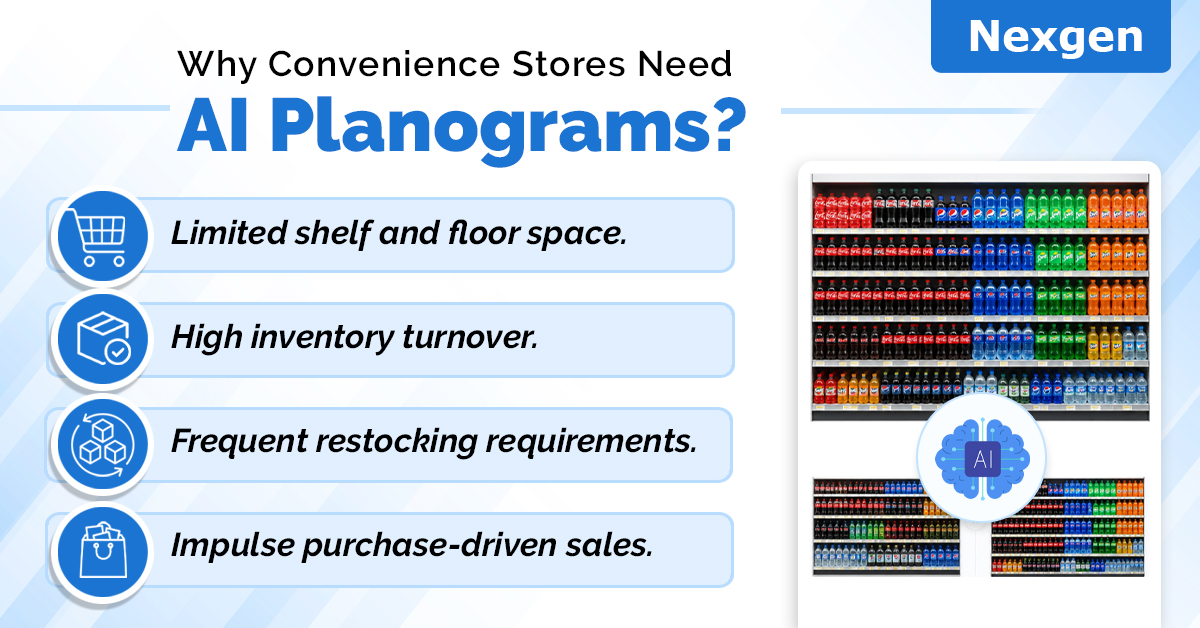
- Limited shelf and floor space.
- High inventory turnover.
- Frequent restocking requirements.
- Impulse purchase-driven sales.
- Diverse customer preferences.
AI planograms help retailers address these challenges by creating smarter shelf arrangements that align with customer buying behavior and operational efficiency.
What are the Key Benefits of AI Planograms for Convenience Stores?
1. Optimized Shelf Space Utilization
Convenience stores have restricted shelf space, making efficient product placement essential. AI planograms analyze sales data and product movement to allocate shelf space more effectively.
High-performing products can be given premium shelf positions, while slow-moving items can be reduced or repositioned. This helps retailers maximize revenue per square foot.
2. Improved Product Visibility
AI identifies which products should be placed at eye level or in high-traffic zones to increase customer attention. Strategic placement encourages impulse purchases, a major revenue driver for convenience stores.
For example, snacks, beverages, and promotional items can be positioned near checkout counters to boost add-on sales.
3. Faster Merchandising Decisions
Traditional planogram creation can be time-consuming and labor-intensive. AI-powered systems automate much of the planning process, reducing the time required to generate and update shelf layouts.
Retailers can quickly adapt layouts for:
- Seasonal promotions.
- New product launches.
- Holiday campaigns.
- Local demand changes.
This agility helps stores stay competitive in rapidly changing retail environments.
4. Enhanced Inventory Management
AI planograms integrate with inventory systems to ensure shelves remain stocked with the right products. They can identify low-stock situations and recommend replenishment strategies before shelves become empty.
This reduces:
- Out-of-stock incidents.
- Overstocking issues.
- Product wastage.
As a result, convenience stores can maintain better inventory accuracy and improve customer satisfaction.
5. Better Customer Shopping Experience
A well-organized store layout makes it easier for customers to find products quickly. AI planograms create intuitive shelf arrangements based on shopper behavior and purchasing habits.
Improved navigation and product accessibility can lead to:
- Shorter shopping times.
- Increased customer satisfaction.
- Higher repeat visits.
Overview of Nexgen POG
Nexgen POG is a robust and user-friendly cloud-based visual merchandising tool. It is designed for quick and efficient planogramming with minimal effort. Planograms in retail can be designed by easily dragging and dropping products. AI-driven autofill capabilities can automatically arrange products based on predefined rules, category roles, and sales data, significantly reducing the time required to build accurate and high-performing planograms.
The multi-device compatibility feature of POG allows users to obtain, share, and edit planograms on any device, including mobile phones. It helps in designing store-specific planograms for increased product visibility and sales.
Get Your Free Trial Today!
FAQ
1. What are AI planograms in convenience stores?
AI planograms are technology-driven shelf planning solutions that use artificial intelligence to optimize product placement, improve shelf organization, and enhance the shopping experience in convenience stores.
2. How do AI planograms help convenience stores increase sales?
AI planograms analyze shopper behavior, sales trends, and product performance to place high-demand items strategically, improving product visibility and boosting impulse purchases.
3. Can AI planograms reduce out-of-stock issues?
Yes. AI-powered systems monitor shelf conditions and inventory patterns to help retailers identify low-stock products quickly and improve replenishment efficiency.
4. What challenges do retailers face when implementing AI planograms?
Common challenges include integration with existing retail systems, data accuracy issues, staff training requirements, and the initial investment needed for AI technology adoption.
5. Why are AI planograms important for convenience stores?
AI planograms help convenience stores maximize limited shelf space, improve operational efficiency, maintain shelf compliance, and deliver a better shopping experience for customers.