The retail industry is rapidly evolving as businesses adopt advanced technologies to improve efficiency, customer experience, and profitability. Traditional store operations often rely on manual processes and workforce-driven tasks, while modern retail automation solutions help streamline operations through intelligent technologies.
From AI-powered planograms to automated inventory management and self-checkout systems, retail automation is transforming how stores operate. Understanding the key differences between retail automation and traditional store operations can help retailers make informed decisions about modernization and long-term growth.
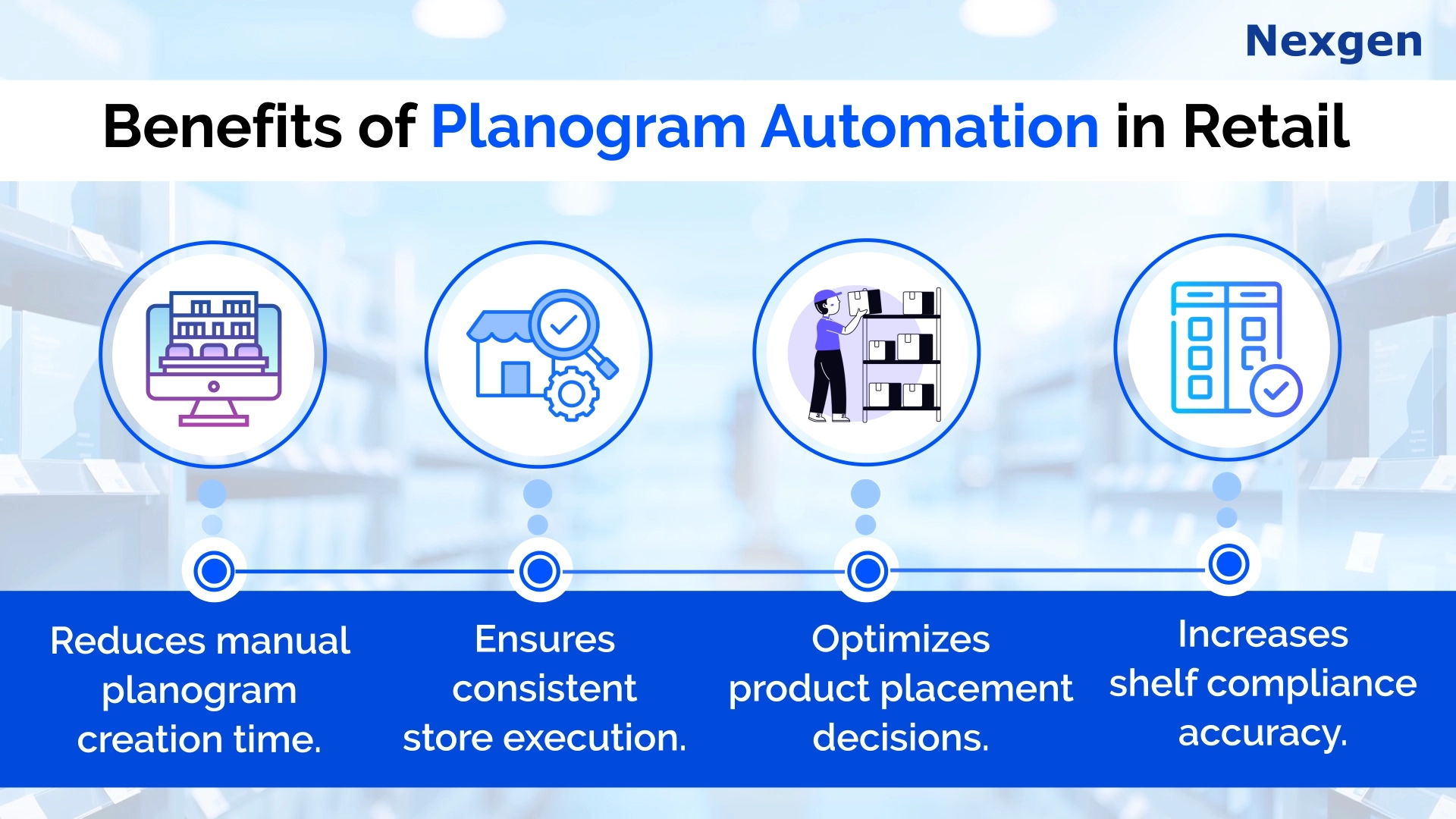
What is Retail Automation?
Retail automation refers to the use of technologies such as artificial intelligence (AI), machine learning, robotics, data analytics, and software systems to automate retail tasks and processes. These solutions reduce manual intervention and improve operational efficiency across stores.
Retail automation can include:
- Automated inventory tracking.
- AI-based shelf optimization.
- Self-checkout systems.
- Digital pricing and smart labels.
- Automated planogram execution.
- Real-time shelf monitoring.
- Retail analytics dashboards.
- Demand forecasting tools.
The goal of retail store planogram automation is to streamline operations, reduce costs, improve accuracy, and create better shopping experiences.
What are Traditional Store Operations?
Traditional store operations depend on manual processes and human labor for daily retail activities. Tasks such as inventory checks, shelf replenishment, pricing updates, merchandising, and customer billing are handled manually by store staff.
Common characteristics of traditional store operations include:
- Manual stock counting.
- Paper-based reporting.
- Human-led merchandising.
- Manual compliance checks.
- Fixed shelf layouts.
- Conventional checkout counters.
- Reactive inventory management.
While traditional methods have supported retailers for decades, they often struggle to keep up with the speed and complexity of modern retail demands.
Key Differences Between Retail Automation and Traditional Store Operations
1. Inventory Management
Automated systems track inventory in real time using RFID, barcode scanning, IoT sensors, and AI-powered analytics. Retailers can instantly identify low-stock items, overstocks, and demand patterns.
In traditional operations, inventory counting is done manually at scheduled intervals. This process is time-consuming and more prone to errors and stock discrepancies.
2. Shelf Monitoring and Compliance
AI-driven shelf monitoring systems can detect misplaced products, shelf gaps, and planogram compliance issues in real time. Alerts help staff correct problems quickly.
Employees manually inspect shelves, which can lead to missed errors, delayed corrections, and inconsistent shelf execution.
3. Customer Experience
Automation improves shopping experiences through faster checkout, personalized promotions, digital kiosks, and optimized product placement.
In traditional store operations, long billing queues, inconsistent product availability, and slower service may affect customer satisfaction.
4. Data and Decision-Making
Retail automation platforms collect and analyze large volumes of data to support smarter business decisions. Retailers can forecast demand, optimize layouts, and improve category performance.
Decision-making in traditional operations often relies on historical reports, manual observations, and limited store data, making it harder to respond quickly to market trends.
5. Speed and Efficiency
In retail automation, processes such as pricing updates, inventory synchronization, and shelf audits can happen instantly across multiple stores.
Manual updates in traditional operations take longer and may create delays or inconsistencies between stores.
Benefits of Retail Automation
- Improved inventory accuracy.
- Faster operational workflows.
- Better shelf compliance.
- Reduced operational costs.
- Enhanced customer experiences.
- Increased sales opportunities.
- Smarter demand forecasting.
- Improved labor productivity.
- Real-time business visibility.
By automating repetitive retail tasks, businesses can improve efficiency while allowing employees to focus more on customer engagement and strategic operations.
Can Traditional and Automated Operations Work Together?
Yes. Many retailers use a hybrid approach where automation supports employees rather than replacing them entirely.
For example:
- AI tools can guide shelf replenishment while staff execute tasks.
- Automated analytics can assist store managers in decision-making.
- Self-checkout systems can complement staffed checkout counters.
This balanced approach helps retailers improve efficiency while maintaining personalized customer service.
Overview of Nexgen POG
Nexgen POG is a robust and user-friendly cloud-based visual merchandising tool. It is designed for quick and efficient planogramming with minimal effort. Planograms in retail can be designed by easily dragging and dropping products. AI-driven autofill capabilities can automatically arrange products based on predefined rules, category roles, and sales data, significantly reducing the time required to build accurate and high-performing planograms.
The multi-device compatibility feature of POG allows users to obtain, share, and edit planograms on any device, including mobile phones. It helps in designing store-specific planograms for increased product visibility and sales.
Get Your Free Trial Today!
FAQ
1. What is the main difference between retail automation and traditional store operations?
Retail automation uses technology and AI-driven systems to automate retail tasks, while traditional operations rely on manual processes and human effort.
2. How does retail automation improve inventory management?
Retail automation enables real-time inventory tracking, automated stock alerts, and accurate demand forecasting, reducing stockouts and overstocks.
3. Does retail automation replace retail employees?
Not entirely. Automation reduces repetitive tasks and allows employees to focus more on customer service, merchandising, and strategic activities.
4. What technologies are commonly used in retail automation?
Common technologies include AI, machine learning, RFID, IoT sensors, computer vision, retail analytics software, and automated checkout systems.
5. Is retail automation suitable for small retailers?
Yes. Small retailers can adopt scalable automation solutions such as digital inventory systems, AI-based planograms, and automated reporting tools to improve efficiency and competitiveness.