The personal care and wellness category is one of the most competitive and fast-evolving segments in retail. From skincare and haircare to vitamins, supplements, and hygiene products, shoppers expect clarity, trust, and ease while navigating these aisles. Effective shelf planning plays a critical role in influencing purchase decisions, improving product discovery, and maximizing sales per square foot. Here is ow retailers can strategically plan shelves for personal care and wellness categories to create a seamless and profitable in-store experience using planogram services.
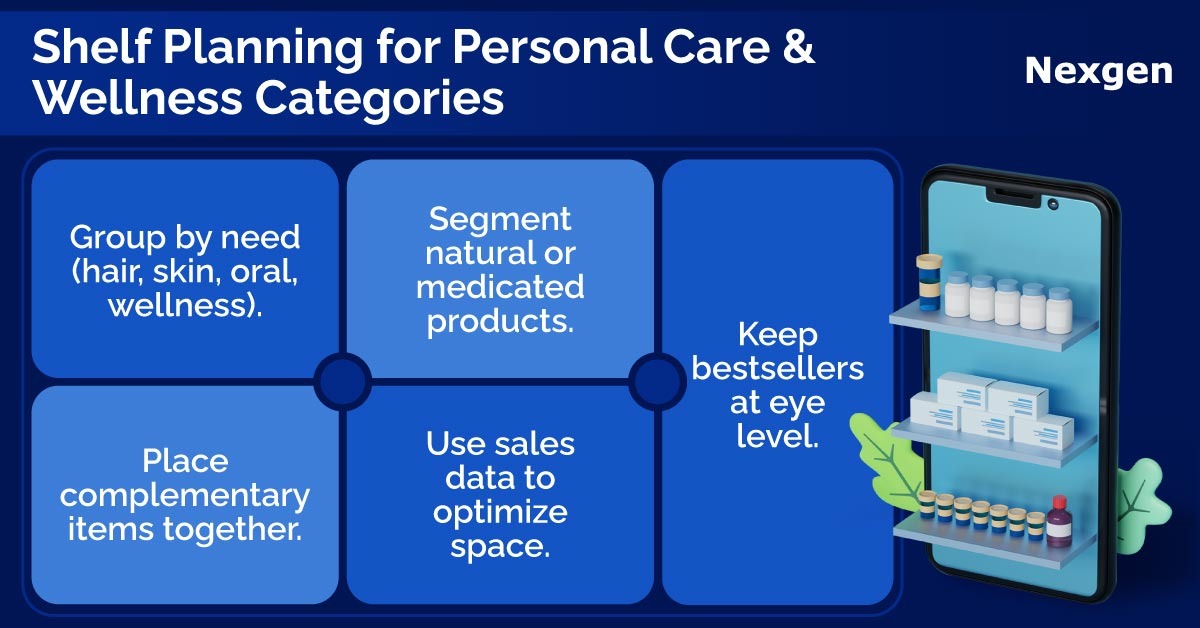
- Understand Shopper Behavior and Purchase Intent: Personal care and wellness shoppers often enter the store with a specific need—whether it is a skincare concern, health goal, or hygiene requirement. Shelf planning should reflect this behavior by making products easy to find and compare. Group products based on usage, concern, or benefit (for example: acne care, anti-aging, immunity boosters, or hair fall solutions) rather than just brand names. This approach reduces decision fatigue and improves shopper confidence.
- Segment the Category Clearly: Clear category segmentation is essential for personal care and wellness shelves. Divide the category into logical sections such as skincare, oral care, haircare, men’s grooming, feminine hygiene, baby care, and wellness supplements. Within each segment, further organize products by sub-category or benefit. Well-defined segmentation improves navigation and encourages shoppers to explore adjacent products they may not have initially planned to buy.
- Use Vertical and Horizontal Blocking Strategically: Vertical blocking with the help of s planogram allows shoppers to view an entire product range at eye level, making brand and category recognition easier. This works especially well for personal care products where shoppers often compare variants quickly. Horizontal blocking, on the other hand, is effective for showcasing premium or high-margin products. A balanced mix of both techniques ensures visibility while maintaining a clean and organized shelf appearance.
- Prioritize Eye-Level and High-Traffic Zones: Eye-level shelf space is prime real estate, especially in personal care and wellness categories where brand trust and visibility influence purchasing decisions. Place best-selling, high-margin, or hero products at eye level. New launches, dermatologist-recommended items, or wellness essentials can also benefit from this positioning. Lower shelves can be reserved for bulk packs or value products, while higher shelves can display niche or specialty items.
- Consider Packaging Size and Shelf Compatibility: Personal care and wellness products come in a wide variety of shapes and sizes—tubes, bottles, boxes, blister packs, and jars. Shelf planning must account for packaging dimensions to avoid overcrowding or wasted space. Adjustable shelving and planogram-based layouts help ensure each product fits neatly, maintains proper facing, and remains easy to access for shoppers and store staff.
- Plan for Seasonal and Trend-Based Changes: The wellness category is heavily influenced by seasonal demand and emerging trends. Immunity boosters may peak during flu season, while skincare and sun care products perform better in summer. Shelf plans should be flexible enough to accommodate seasonal shifts, promotional campaigns, and new product introductions. Regular planogram updates help retailers stay relevant and responsive to changing consumer needs.
Overview of Nexgen Planogram Services
Nexgen offers store-specific planogram services for clients that optimize sales and achieve category objectives. We create customized planograms for your business to ensure that these are better aligned with your goals and merchandising strategies. Our expertise in planogram automation helps us build planograms faster, better and consistently. Whether it is creating a planogram from scratch, or a typical reset, we have the knowledge, tools, and experience to get the job done for you.
Get in Touch!