The New Year is more than a fresh calendar—it is a strategic reset for retailers. As shoppers embrace new goals, habits, and priorities, store shelves must evolve just as quickly. From healthier lifestyles and conscious spending to renewed interest in organization and self-improvement, New Year resolutions directly influence purchasing behavior. Strategic shelf planning, such as planograms helps retailers translate these resolutions into measurable revenue by aligning product placement with shopper intent.
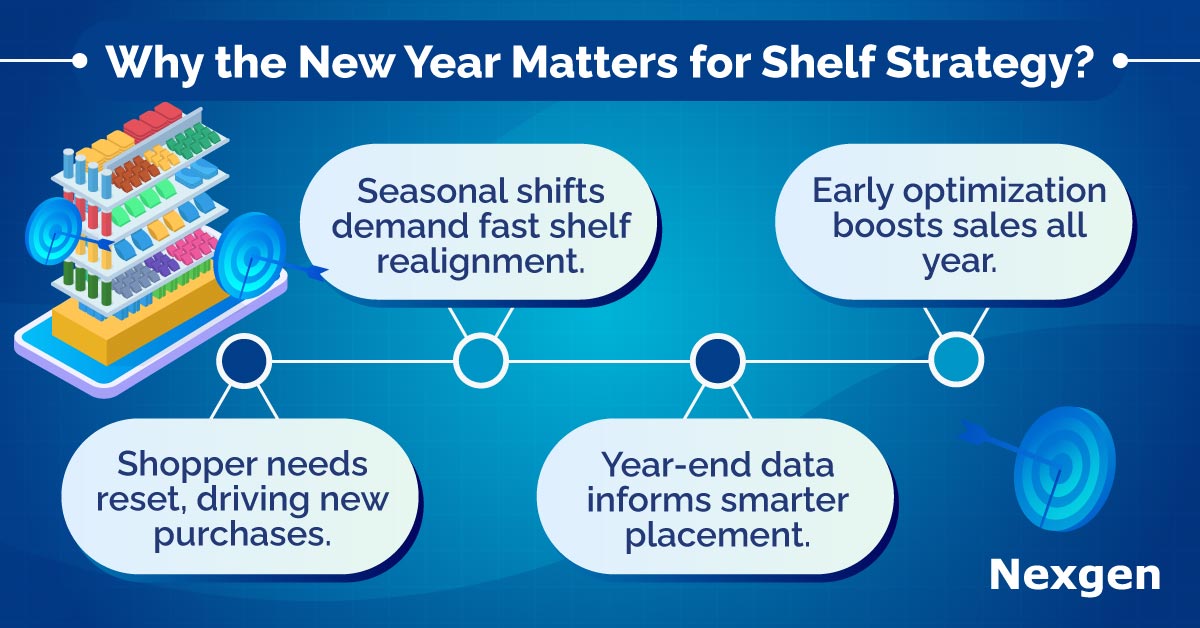
Why is the New Year a Critical Moment for Shelf Strategy?
Post-holiday retail often comes with mixed challenges: excess inventory in some categories, demand spikes in others, and shoppers who are more intentional with their purchases. The New Year presents a unique opportunity to rethink shelf layouts, refine assortments, and set up the tone for the months ahead. Strategic shelf planning ensures:
- Faster recovery from holiday sell-through imbalances.
- Improved product visibility for high-demand New Year categories.
- Better alignment between shopper goals and merchandising strategies.
Why is the New Year a Critical Moment for Shelf Strategy?
Retailers that proactively refresh shelves in January often gain an early competitive advantage by capturing renewed shopper motivation. A planogram help bridge the gap between strategy and execution, ensuring that New Year merchandising goals are implemented accurately on the sales floor.
1. Understanding New Year Shopper Behavior
New Year shoppers are driven by change. Their purchases often reflect aspirations such as healthier living, productivity, savings, and organization. This behavioral shift impacts multiple categories—from groceries and wellness to apparel, home storage, and electronics. Effective shelf planning considers:
- Increased demand for health, wellness, and fitness-related products.
- Growth in organization, storage, and home improvement items.
- Shifts toward value-driven and sustainable product choices.
By understanding these motivations, retailers can design shelves with the help of planograms to guide shoppers effortlessly toward relevant products.
2. Turning Shelf Space into a Strategic Asset
Shelf space is one of the retail’s most valuable assets. Strategic shelf planning transforms it from a static display into a dynamic revenue driver. Instead of simply filling shelves, retailers can create layouts that influence decision-making using planograms, such as:
- Prioritizing high-velocity and high-margin products.
- Allocating space based on demand forecasts rather than past layouts.
- Reducing clutter to improve product discovery.
When shelf space is planned strategically, shoppers find what they need faster, leading to higher conversion rates and increased basket sizes.
3. Planogram Strategies in New Year Shelf Planning
Planograms play a crucial role in executing New Year shelf strategies effectively. They provide a visual and data-backed blueprint for product placement, ensuring consistency while allowing flexibility for local demand. With planogram-driven shelf planning, retailers can:
- Quickly reset layouts after year-end sales.
- Test different shelf configurations without physical trial-and-error.
- Maintain brand and category consistency across locations.
Planograms help bridge the gap between strategy and execution, ensuring that New Year merchandising goals are implemented accurately on the sales floor.
4. Aligning Categories with Seasonal Resolutions
Strategic shelf planning in the New Year goes beyond individual products—it focuses on category alignment. Grouping complementary items together helps retailers tap into resolution-based shopping missions. Examples include:
- Cross-merchandising healthy snacks with fitness accessories.
- Placing storage solutions near home organization products.
- Highlighting sustainable alternatives within core categories.
This approach not only improves shopper convenience but also encourages impulse purchases aligned with New Year goals.
5. Using Data to Optimize New Year Shelf Decisions
Data-driven insights are essential for effective New Year shelf planning. Sales performance, shopper behavior, and seasonal trends provide clarity on what deserves prime placement. Retailers can leverage data to:
- Identify underperforming SKUs and reallocate space.
- Forecast demand shifts early in the year.
- Measure the impact of new shelf layouts on sales.
When data informs shelf decisions, retailers move from guesswork to precision—maximizing both space efficiency and profitability.
Overview of Nexgen POG
Nexgen POG is a robust and user-friendly cloud-based visual merchandising tool. It is designed for quick and efficient planogramming with minimal effort. Planograms in retail can be designed by easily dragging and dropping the products. The multi-device compatibility feature of POG allows you to obtain, share and edit on any device, including your phone. It helps in designing store-specific planograms for increased product visibility and sales.
Get Your Free Trial Today!