The start of a new year is the perfect time for retailers to set fresh business goals, drive sales, and create meaningful shopper experiences. However, achieving these goals is not only about having the right products—it is also about how they are displayed. Shelf planning, particularly when guided by planogram services, plays a pivotal role in aligning retail strategies with business objectives.
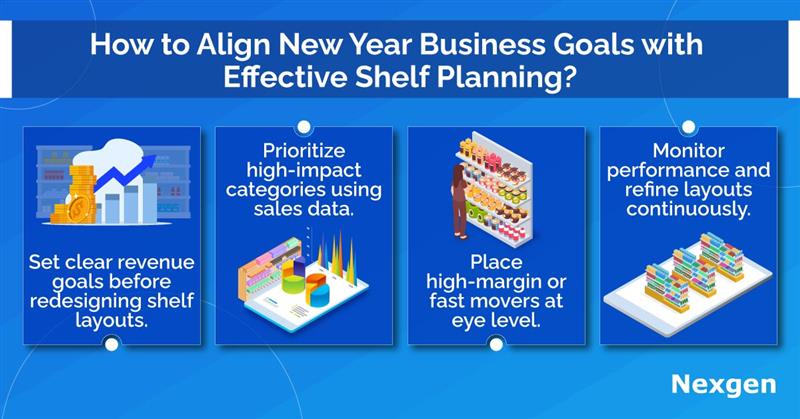
1. Define clear business goals for the New Year.
- Increase overall sales revenue?
- Boost sales of specific product categories?
- Improve shopper experience and dwell time?
- Reduce stockouts and overstocking issues?
Having clear objectives allows you to tailor your shelf layout and product placement to directly support these goals.
2. Leverage data to understand shopper behavior.
Effective planogram relies heavily on understanding your customers. Analyzing past sales data, seasonal trends, and shopper patterns helps you identify:
- High-performing products that need prominent placement.
- Products with low visibility require repositioning.
- Optimal product assortment for each section of your store.
With these insights, you can make data-driven decisions that align your shelf planning with business goals for the New Year.
3. Use planograms for strategic shelf placement.
Planograms are a powerful tool for visualizing and implementing your shelf strategy. They help retailers:
- Maximize shelf space and product visibility.
- Ensure consistent layouts across multiple store locations.
- Balance product variety without overcrowding shelves.
By using planograms, you can ensure every inch of shelf space contributes to achieving your New Year objectives.
4. Incorporate seasonal and promotional strategies.
The New Year often comes with seasonal promotions, festive themes, and special campaigns. Aligning your shelf planning with these strategies can:
- Draw attention to promotional items.
- Encourage cross-selling and upselling.
- Create visually appealing displays that enhance the shopper experience.
Custom displays, end-cap placements, and thematic arrangements can help reinforce your business goals and boost sales performance.
5. Monitor, adjust, and optimize.
Shelf planning is not a one-time task. Throughout the New Year, continuously monitor sales performance and shopper behavior to identify opportunities for improvement. Planogram software and analytics tools allow you to:
- Track how changes in shelf layouts impact sales.
- Quickly adjust product placement for optimal performance.
- Maintain alignment between business objectives and in-store execution.
Overview of Nexgen Planogram Services
Nexgen offers store-specific planogram services for clients that optimize sales and achieve category objectives. We create customized planograms for your business to ensure that these are better aligned with your goals and merchandising strategies. Our expertise in planogram automation helps us build planograms faster, better and consistently. Whether it is creating a planogram from scratch, or a typical reset, we have the knowledge, tools, and experience to get the job done for you.
Get in Touch!