In 2025, retail success is no longer about offering the right products - it is about delivering the right experience to every shopper, every time. Hyper-personalization has become a defining strategy for modern retailers, and AI-driven planograms play a crucial role in making it possible. By combining real-time data, customer behavior insights, and automated shelf planning, retailers can now design store layouts that feel tailor-made for each shopper segment.
The Shift Toward Hyper-Personalization
Shoppers today expect experiences that align with their preferences, lifestyles, and buying habits. They want stores that ‘understand’ them, offering relevant products, intuitive layouts, and seamless journeys. Hyper-personalization goes beyond traditional merchandising by using advanced analytics and AI to deliver individualized shopping experiences at a scale, both online and in-store.
AI-driven planograms enable this transformation by connecting shopper data with smart product placement. Retailers no longer rely on guesswork; instead, they use automated insights to create shelves that reflect real shoppers' behavior.
How Do AI-Driven Planograms Enable Personalization?
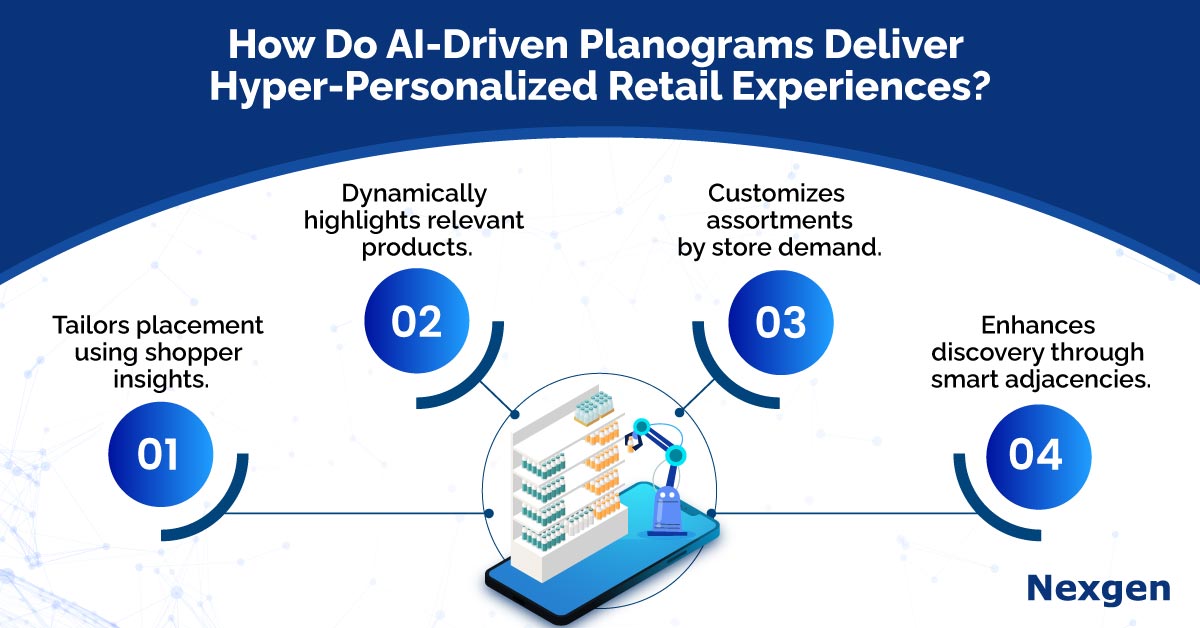
- Data-backed shelf layouts: AI quickly processes massive datasets—from purchase history and customer demographics to seasonal trends and local demand. Using this information, planograms automatically position products where they perform best, ensuring shoppers see items that align with their needs and preferences.
- Store-specific customization: Hyper-personalization is not one-size-fits-all. Ai-driven planograms allow each store to have a customized layout based on local shopper behavior. Urban stores may highlight ready-to-eat meals, while suburban stores showcase family-sized items. This local-level relevance drives higher engagement and conversion.
- Predictive product placement: AI uses forecasting to determine what shoppers will want next. Whether it is trending wellness items or regionally popular snacks, planograms adjust product placement proactively. This helps retailers stay ahead of demand and deliver the right products at the right time.
- Personalized shopper journeys: By mapping customer flow patterns, ai-driven planograms ensure that high-interest products are placed along natural shopping paths. This enhances convenience, reduces friction, and creates a more enjoyable in-store experience.
For example, if data shows a rising interest in eco-friendly products, AI may arrange sustainable items at eye level or near complementary categories to increase visibility.
- Faster execution and real-time adjustments: Traditional planogram changes can take weeks, but ai-driven systems update layouts in minutes. Retailers can quickly respond to sudden demand spikes, product launches, or seasonal shifts. Real-time adaptability ensures planograms remain relevant, personalized, and performance driven.
Examples of Hyper-Personalization in Retail Sector
- Health-focused customers see more organic and low-calorie items featured prominently.
- Tech-savvy shoppers encounter smart gadgets or accessories near popular electronics sections.
- Local cultural preferences influence product grouping, seasonal displays, and bundle offers.
These micro-targeted merchandising decisions help retailers improve sales, customer satisfaction, and brand loyalty.
Overview of Nexgen POG
Nexgen POG is a robust and user-friendly cloud-based visual merchandising tool. It is designed for quick and efficient planogramming with minimal effort. Planograms in retail can be designed by easily dragging and dropping the products. The multi-device compatibility feature of POG allows you to obtain, share and edit on any device, including your phone. It helps in designing store-specific planograms for increased product visibility and sales.
Get Your Free Trial Today!