Designing a shopper-friendly store today is no longer about aesthetic layouts or attractive product displays; it is about creating an intuitive shopping experience that guides customers seamlessly from entry to checkout. To achieve this, retailers are increasingly integrating customer journey mapping with planograms . This powerful combination helps retailers understand shopper behavior, optimize product placement, and increase overall store profitability.
Why Shopper Journey Mapping Matters?
Shopper journey mapping is the process of visualizing all step customers take in your store, from the moment they walk in, to the moment they complete a purchase. It highlights customer motivations, pain points, decision-making triggers, and emotional touchpoints.
A well-defined journey map helps retailers:
- Identify high-traffic zones and dead zones.
- Understand product discovery patterns.
- Improve navigation flow.
- Predict customer needs at various stages of shopping.
- Create personalized and engaging in-store experiences.
When retailers see through the eyes of the customer, they can design a layout that feels intuitive and inviting.
Integrating Journey Mapping with Planogram Planning: A Winning Approach
While journey mapping defines what the shopper experiences, planograms determine how products are arranged to support that experience. They bring structure, consistency, and visual logic to shelves—ensuring every product is placed where customers expect to find it. Effective planogram planning helps retailers ensure product visibility, optimize shelf space, drive impulse purchases, group related items for added convenience, and maintain brand consistency across stores. Following are some planogram steps to create a cohesive, shopper-centric environment that enhances both customer experience and overall store performance:
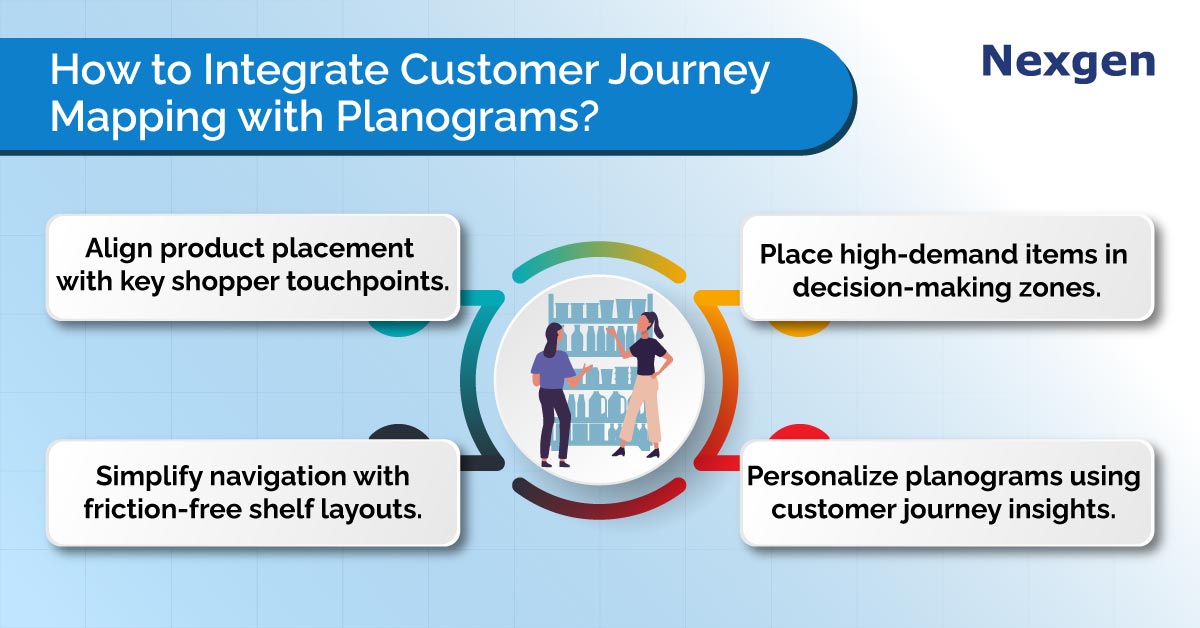
- Start with shopper insights: Use customer journey data, such as entry points, time spent in aisles, and popular product paths to design planograms that mirror real behavior. For example, if journey mapping reveals that shoppers usually browse snacks before beverages, planograms can position these categories adjacent to each other.
- Design layouts based on customer flow: Map the store layout so high-demand items are easy to locate while impulse categories are placed along natural pathways. Planograms can then highlight key products in hotspot zones to attract attention effortlessly.
- Improve convenience with logical category groupings: Customers prefer quick, intuitive shopping. Integrating journey insights allows retailers to group complementary products logically, such as placing baking ingredients near cake mixes or placing batteries near electronics.
- Optimize shelf height and product visibility: Journey mapping often reveals the types of shoppers entering the store, families, seniors, students, etc. Using this insight, planograms can allocate premium shelf areas for products meant for these audiences, ensuring maximum visibility and reachability.
- Leverage planograms to solve shelf planning issues: If journey maps show frustration with locating items or navigating crowded aisles, planograms can be redesigned to declutter shelves, simplify signage, and place frequently purchased items at eye level.
- Ensure seasonal and promotional alignment: Seasonal trends often influence how shoppers move through a store. By integrating journey insights, planograms can highlight seasonal favorites in high-traffic areas, boosting impulse purchases and improving shopper satisfaction.
Overview of Nexgen POG
Nexgen POG is a robust and user-friendly cloud-based visual merchandising tool. It is designed for quick and efficient planogramming with minimal effort. Planograms in retail can be designed by easily dragging and dropping the products. The multi-device compatibility feature of POG allows you to obtain, share and edit on any device, including your phone. It helps in designing store-specific planograms for increased product visibility and sales.
Get Your Free Trial Today!