After-sales support is a critical yet often overlooked aspect of retail technology and planogram services. Many retailers invest in advanced tools to optimize shelf layouts, only to face unexpected operational challenges after implementation. These frustrations can slow execution, reduce efficiency, and directly impact store performance.
Understanding these challenges is the first step toward solving them. Below are the top five after-sales shelf planning frustrations retail teams commonly face, and how the right planogram partner, like Neexgen Planogram Services can turn these issues into opportunities for growth.
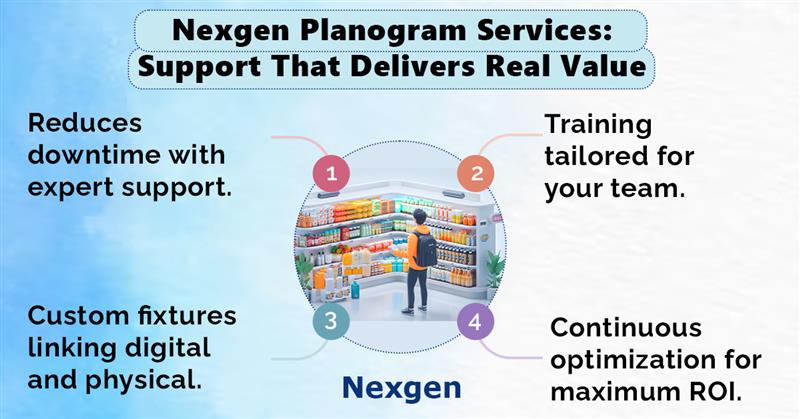
1. Training Gaps That Limit Team Productivity
One of the most common frustrations retail teams experience is insufficient training after deployment. Even the most advanced planogram systems are ineffective if store teams and planners do not fully understand how to use them. Poor onboarding leads to execution errors, underutilized features, and slower adoption across store networks.
Retail teams need structured, ongoing training rather than one-time sessions. Continuous learning ensures employees remain confident in using the system and can adapt to new features or updates without disruption. Nexgen Planogram Services provide comprehensive onboarding and ongoing training support, enabling teams to master workflows quickly and maintain consistent shelf execution across stores.
2. Shelf Compliance Errors That Hurt Sales
Even well-designed planograms can fail if they are not executed correctly in-store. Compliance issues such as incorrect product placement, missing items, or inconsistent layouts can confuse shoppers and weaken brand presentation. Without proper monitoring and expert support, these errors become frequent and difficult to correct.
Advanced compliance support and streamlined execution processes help retail teams maintain accuracy. Automated checks and expert guidance ensure planograms are followed precisely, improving store consistency, shopper experience, and overall sales performance.
3. Slow Planogram Updates That Delay Execution
Retail environments change rapidly due to promotions, seasonal shifts, and product launches. Many retailers struggle with slow post-sales support, which delays critical shelf updates and reduces agility.
When updates take too long, stores miss key sales windows and fall behind competitors. Fast, responsive update cycles and expert assistance allow retailers to implement changes quickly. Efficient after-sales support ensures planogram adjustments reach stores on time, keeping operations competitive and responsive.
4. Limited Support for Custom Fixtures
Modern retail spaces increasingly rely on custom shelving and fixtures to enhance brand identity and shopper engagement. However, many planogram solutions are built around standard fixtures and lack flexibility.
This limitation forces teams to improvise, creating inefficiencies and inconsistencies in execution. Nexgen Planogram Services offer custom fixture support that enables retailers to design realistic planograms reflecting their actual store environments. Tailored solutions improve visualization, execution accuracy, and merchandising effectiveness.
5. Lack of Ongoing Optimization and Strategic Support
After implementation, some providers offer minimal follow-up assistance. Retailers are left without insights into performance improvements or strategies to refine shelf layouts over time.
Continuous performance analysis and expert consultation help retailers evolve their planogram strategies. Ongoing optimization ensures shelf plans adapt to shopper behavior, category trends, and business goals, maximizing long-term returns.
Turning After-Sales Challenges into Competitive Advantages
After-sales shelf planning frustrations can significantly impact retail efficiency, but they do not have to be permanent obstacles. With the right planogram partner, such as Nexgen POG, retailers gain access to expert training, reliable compliance support, rapid updates, and custom fixture capabilities. By addressing these common challenges, retail teams can focus on delivering better shopping experiences and driving consistent sales growth.
Get Your Free Trial Today!