As winter fades and shoppers look for freshness, color, and renewal, spring becomes a key season for retailers to refresh their shelves. From lighter apparel and outdoor essentials to fresh flavors and seasonal décor, aligning your product placement with customer expectations is critical. This is where planograms play a powerful role, helping retailers organize, optimize, and maximize the impact of spring assortments.
Why Spring Product Placement Matters
Spring brings a noticeable shift in buying behavior. Customers actively seek vibrant, seasonal products and a more engaging in-store experience. Poorly arranged shelves can lead to missed opportunities, while strategic placement can significantly boost visibility and sales. Planograms ensure that every product is positioned with purpose, making the transition from winter to spring seamless and effective.
Best Planogram Practices for Spring Assortments
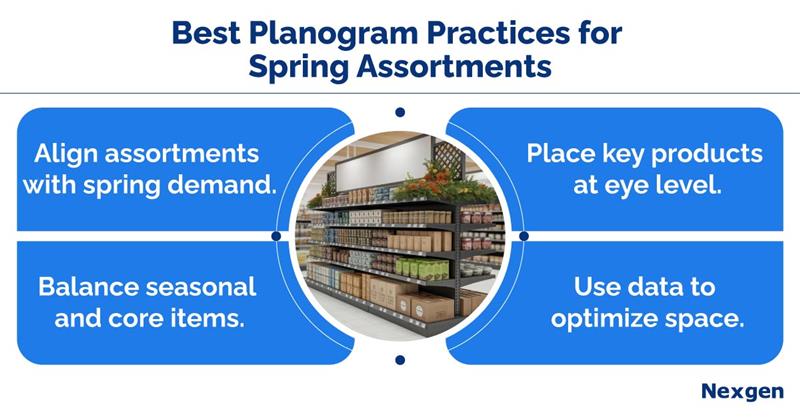
1. Prioritize Seasonal Hotspots
High-traffic areas such as entrances, endcaps, and checkout zones should showcase spring-focused products. Highlight items like fresh produce, floral-themed goods, gardening tools, and spring fashion essentials. Planogram help allocate these premium spaces to high-demand seasonal items.
2. Create a Smooth Seasonal Transition
Avoid abrupt changes by gradually phasing out winter inventory. Use planograms to shift winter products to secondary shelves or clearance sections while introducing spring items into prime shelf positions. This ensures a balanced and clutter-free display.
3. Use Color Blocking and Visual Appeal
Spring is all about bright and refreshing colors. Arrange products using color-blocking techniques to create visually appealing displays. Grouping similar shades or complementary colors can draw attention and enhance the overall shopping experience.
4. Optimize Shelf Space Allocation
Not all products deserve equal space. Use sales data and demand forecasts to assign more shelf space to high-performing spring items. Planograms help retailers make data-driven decisions, ensuring efficient use of every shelf space.
5. Leverage Cross-Merchandising Opportunities
Encourage impulse buying by placing complementary products together. For example, pair gardening tools with seeds and fertilizers, or place picnic items alongside snacks and beverages. Planograms make it easy to design these strategic product adjacencies.
6. Highlight New and Trending Products
Spring is a great time to introduce new arrivals. Use eye-level shelves and focal points to highlight trending or newly launched products. This increases visibility and encourages customers to explore more.
Overview of Nexgen POG
Nexgen POG is a robust and user-friendly cloud-based visual merchandising tool. It is designed for quick and efficient planogramming with minimal effort. Planograms in retail can be designed by easily dragging and dropping the products. The multi-device compatibility feature of POG allows you to obtain, share and edit on any device, including your phone. It helps in designing store-specific planograms for increased product visibility and sales.
Get Your Free Trial Today!