In today’s competitive retail landscape, success depends on more than just product availability—it depends on how effectively products are presented to shoppers. Shopper-centric visual merchandising focuses on designing store layouts and displays based on customer behavior, preferences, and buying patterns. Instead of simply organizing shelves for operational convenience, this approach ensures every element in the store is aligned with how shoppers browse, choose, and purchase.
This is where planograms play a crucial role. By combining data insights with strategic layout planning, retailers can create more engaging and efficient in-store experiences that align with shopper expectations.
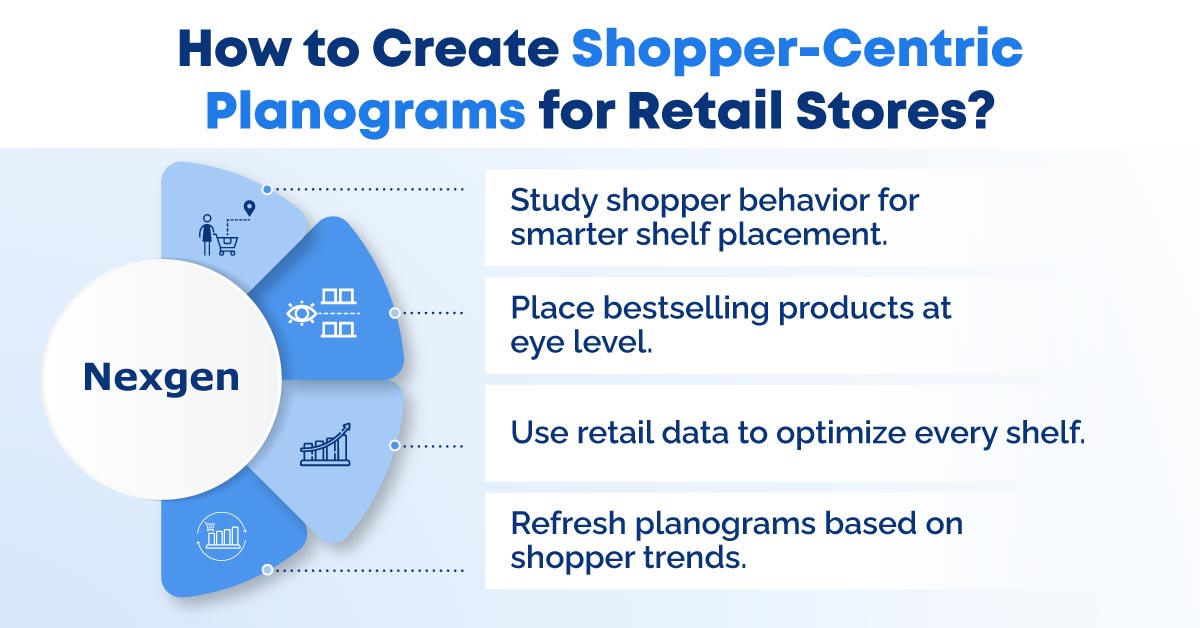
Understanding Shopper-Centric Visual Merchandising
Shopper-centric visual merchandising planogram is a strategy that places the customer at the core of every merchandising decision. It uses data insights, shopper psychology, and real-time trends to create intuitive and engaging shopping experiences. This includes:
- Positioning high-demand products at eye level.
- Grouping complementary items to encourage cross-selling.
- Designing clear navigation paths for easy product discovery.
- Aligning displays with seasonal and local preferences.
Rather than a one-size-fits-all layout, it adapts to the needs of specific shopper segments, ensuring a more personalized shopping journey.
Key Elements of Shopper-Centric Merchandising
1. Understanding Shopper Behavior
Retailers must analyze how customers move through the store, where they pause, and what influences their decisions. Tools like heatmaps, sales data, and foot traffic analysis provide valuable insights to optimize store layouts.
2. Strategic Shelf Placement
Prime shelf space is allocated based on product performance and shopper demand. Fast-moving items are placed for easy access, while premium products are positioned to attract attention and drive conversions.
3. Clear Visual Communication
Signage, labels, and displays should guide shoppers effortlessly. Clean, clutter-free shelves improve product visibility and reduce decision fatigue.
4. Personalization and Localization
Different stores may require unique layouts depending on demographics, cultural preferences, and seasonal demand, ensuring relevance for every shopper segment.
Why Shopper-Centric Visual Merchandising Matters
1. Enhances Customer Experience
When shoppers can easily find what they need, their overall experience improves. A seamless journey encourages longer visits and repeat purchases.
2. Drives Higher Sales
Strategic product placement increases impulse buying and cross-selling opportunities, encouraging shoppers to add more items to their cart.
3. Improves Space Utilization
Retail space is limited, and every shelf matters. A shopper-focused approach ensures high-performing products receive optimal visibility, maximizing sales per square foot.
4. Builds Brand Loyalty
A well-organized and visually appealing store creates a positive impression, encouraging customers to return for a consistent and convenient shopping experience.
Role of Planogram in Shopper-Centric Merchandising
Planograms act as a visual blueprint for implementing shopper-centric strategies. They help retailers align shelf space with demand, test and optimize layouts using data insights, ensure consistency across store locations, and quickly adapt to changing trends.
Best Practices to Implement Shopper-Centric Merchandising
- Use data analytics to understand shopper preferences.
- Regularly update displays based on sales performance.
- Keep layouts simple and easy to navigate.
- Highlight promotions and seasonal products effectively.
- Train staff to maintain merchandising standards consistently.
Overview of Nexgen POG
Nexgen POG is a robust and user-friendly cloud-based visual merchandising tool. It is designed for quick and efficient planogramming with minimal effort. Planograms in retail can be designed by easily dragging and dropping the products. AI-driven autofill capabilities can automatically arrange products based on predefined rules, category roles, and sales data, significantly reducing the time required to build accurate and high-performing planograms. The multi-device compatibility feature of POG allows you to obtain, share and edit on any device, including your phone. It helps in designing store-specific planograms for increased product visibility and sales.
Get Your Free Trial Today!